 Skip to content

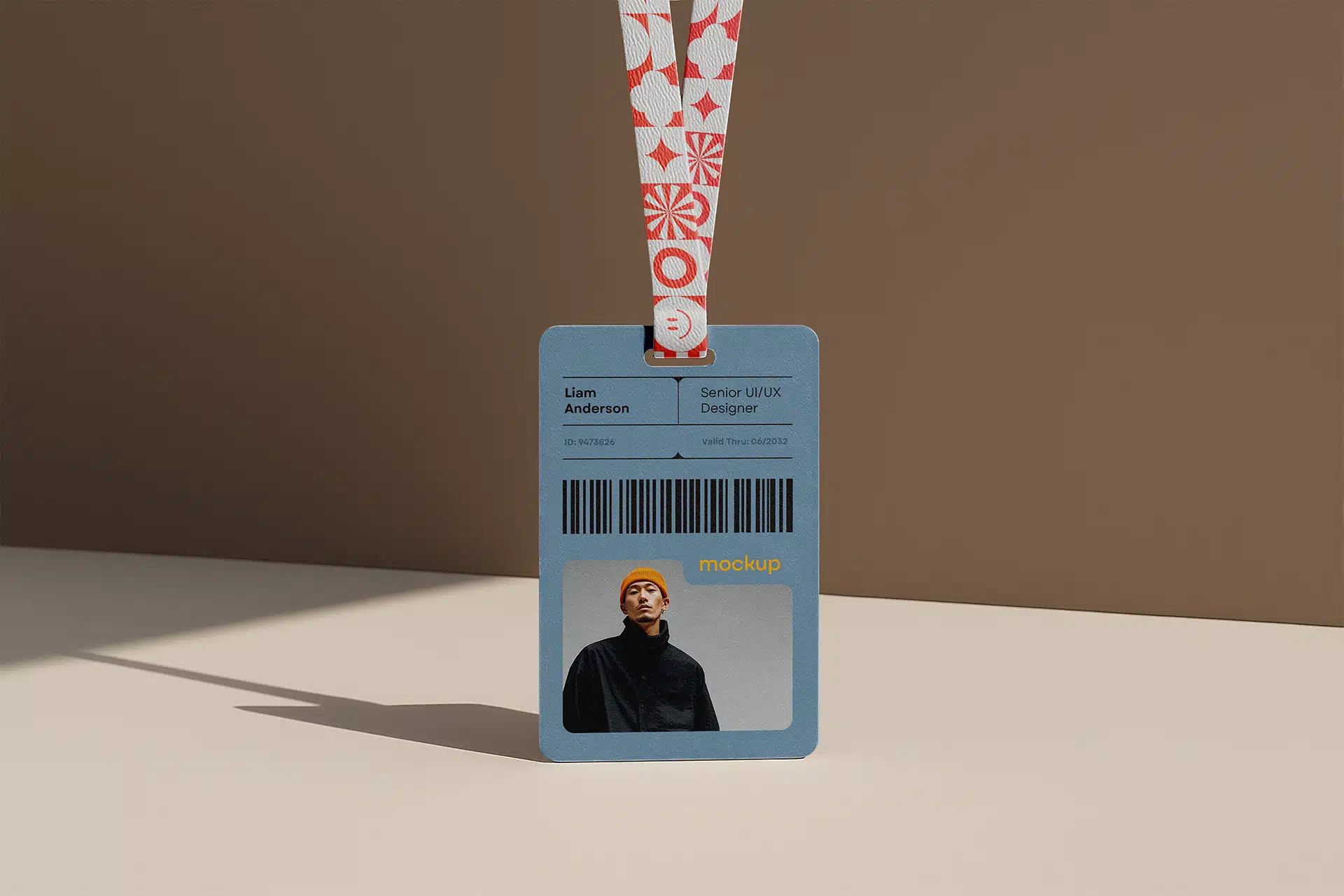
Smart businesses are organised businesses. Not simply across their bread and butter offering, but throughout every facet of the organisation, from HR operations to workplace security. Straddling the two disciplines, and my focus for today, is employee identification.
Far more than a mere name badge or uniform, a robust staff identification system safeguards your organisation from visitor mix-ups and staff lockouts on the mild end of the spectrum, and wards off safeguarding/security risks on the more serious end.
Needless to say, businesses that approach it with care, attention an intention are better positioned to retain clients and staff. This article wrangles with the what, why and how.
Contents:
- TL;DR
- What Counts as Employee Identification?
- The Role of Employee Identification in Modern Workplaces
- Core Benefits of Robust Staff Identification Systems
- Choosing the Right Employee Identification Setup
- Next Steps: Improving Your Workplace Identification
- FAQs

TL;DR
Employee identification helps organisations improve security, efficiency, public assurance and professionalism by making staff easily recognisable and managing access effectively. From ID cards and lanyards to digital software, the right system supports both workplace operations and visitor safety.
What Counts as Employee Identification?
Not to be facetious, but it’s exactly what it sounds like: a trackable way of identifying staff within an organisation, often using a unique number or code within its HR, payroll, or security systems.
Acting as an internal identifier for managing records, time tracking and access control, as well as an external signposting tool (usually for visitors or event attendees), they’re commonplace in the modern workplace yet widely underestimated.
Typical formats include:
- ID cards, either loose or worn on an employee’s person in a dedicated holder.
- Name badges, pinned to a jacket or waistband.
- Staff lanyards, worn around the neck or clipped in place.
- Digital systems, varying in sophistication, which might require an ID number or passcode to log into, or biometric data (think: fingerprint, iris pattern or voice) for access control.
Of course, each type is tied to a specific scope and purpose. For instance, a door pass ID card will be intended for internal access control, whereas branded staff lanyards might serve a multi-faceted purpose, including public-facing identification at events.
Everything Your Organisation’s Employee ID Cards Should Include
Now we’re all on the same page about what exactly constitutes employee identification, another question crops up: what details should it include?
Indeed, the exact ingredients will depend on the DNA of your organisation and the intended use of the lanyard, ID card, badge and so on. Nonetheless, here are the elements typically considered essentials:
- The name of the employee, volunteer or partner,
- Their job title or role within the organisation,
- Which department or team they are from,
- A headshot photograph of the wearer
- Contact information, in the case that the employee ID is lost
- Certifications or authorisation
- The organisation’s logo,
- And, of course, the staff identification number!
Whilst these are the basics, there are plenty of ways to zhuzh up the design. For starters, a charitable organisation might be concerned with fostering a diverse and inclusive environment, and so include pronouns or accessible tactile elements like Braille. Through a pure functionality lens, you might wish to incorporate extras, such as barcodes, magnetic strips or QR codes for clocking in and out of the building. Truly, there are so many options on the table.

The Role of Employee Identification in Modern Workplaces
Although employee identification is by no means mandatory under UK law, it is best practice. In fact, I’d go so far as to say that it’s one of the most important layers of your security system, even if it quietly fades into the background. But why?
Well, the simple truth is that as the workplace has evolved, so have the threats. In 2026, the business world is seeing an escalating number of risks to mitigate: break-ins, direct action groups, robbery, unauthorised access, insider threats and tailgating, to name but a few.
The latter, in particular, is drawing widespread attention, with recent industry statistics indicating that 40% of security breaches in corporate facilities are due to ‘piggybacking’ incidents. It’s for the same reason that the government has just tightened up legislation around football tailgating.
In my mind, though, it’s the safeguarding implications that ought to give rise to the greatest concern. Without a proper visitor management system in place – I’m not talking about a spreadsheet or pen and paper that’s easily forgotten – vulnerable people and children, especially, are placed at unnecessary risk.
As such, employee identification should be at the top of employers’ priorities, not just for the aesthetic brand identity value, but for safety too.
The Core Benefits of Robust Staff Identification Systems
We’ve already talked about the business benefits of wearing ID cards at length over on the rest of the Only Lanyards blog, so I’ll be brief here.
Improve Workplace Security & Access Control
Employee ID cards are a simple yet effective tool for combating unauthorised entry, especially those that double up as a key pass. Conveniently attached to a company lanyard, it’s a seamless and relatively low-cost solution compared to more maintenance-heavy alternatives like turnstile mechanisms with optical detection.
Introduce a colour-coded element, and it takes a glance to tell who’s who, which access levels they can reach, and where they report to – ideal for corporate entities with moderate employee turnover.
Streamline Access to Sensitive Information
You might be a public servant, work for a private consultancy firm, or run your own business; in each of these cases, and indeed many more, you’ll want to ensure a water-tight data access framework to protect your IP and stay in the good books of GDPR.
The simple way of achieving this – you guessed it – is by bringing your staff ID into the picture. With them connected up to your tech, you can assign different levels of data clearance to each employee to control who has access to sensitive information and under what circumstances. It’s the fast-track route to more holistic data integrity and security.
Support Organisation & Record Keeping
Employee ID systems are also an integral cog in the record-keeping machine. Integrated into your digital systems, there’s no need to rely on outdated and cumbersome spreadsheets to manage payroll details, shift information, etc. – the whole thing is automated.
Build Trust with Customers and Visitors
With everyone’s ID front and centre, the potential for confusion or mistaken identity no longer needs to keep you up at night.
Projecting an air of professionalism and, if you’ve designed them well, your brand values, the ID cards donned by your staff help shape that all-important first impression of your brand, formed in mere seconds.
Make Staff Easy to Identify in Busy Environments
Immediate visual identification makes things breezy in the office, but in the context of customer service and event planning, it’s a gamechanger. Customers can instantly put a face to a name, helping employers get to the bottom of reviews and complaints, and it helps event attendees more easily get the support they need.
In a bustling exhibition hall, for example, event staff and panellists’ ID cards improve the on-the-day logistics, as security and other house staff know at a glance who needs to be where.

Choosing the Right Employee Identification Setup for Your Organisation
There’s no one-size-fits-all solution for employee identification; if there’s anyone who ought to know how to design them, it’s you. It all starts with a simple question, “Where will these be worn and what do we need them to do?”
ID Cards
Designing staff ID cards typically starts with the dimensions, so right at the start, ask yourself how large they need to be. At Only Lanyards, we usually recommend CR80 for staff and contractor access, which is compact enough for comfortable daily use, and reserve the larger size CR100 for public-facing jobs where high visibility is key. Smaller sizes can be used in higher-risk environments, such as healthcare or manufacturing.
Also consider their durability: cheaply printed card or paper is going to fade over time and leave a poor impression on visitors, whilst higher-grade materials can withstand daily wear and tear in pristine condition for much longer. Granted, if they’re only temporary passes, a paper card will last in a PVC holder.
If you really want to impress, though, a sleek protective finish or a holographic overlay really catches the eye.
Lanyards
It’s likely your staff identification will also need complementary lanyards for carrying them around, especially in fast-paced environments where staff are always on the go. Here, robust materials are a given, but don’t forget to mull over the other design details.
Is fast scanning a priority, or should the badge stay forward-facing? How does colour coding factor into your plans? Do they need to be multi-purpose? Answering these questions will guide you towards a decision.
For further information, allow me to direct you towards our comprehensive buying guide.
Digital Systems
If physical employee ID cards are the visible layer of staff identification, a digital system is the engine room quietly humming in the background. It takes the basics and scale it across your entire organisation, connecting people, places and permissions in real time.
When choosing between platforms, think about what you need it to do – access control, time tracking, system logins? The right setup should integrate with existing tools and scale with your business to cover all bases.
A Combination?
Yes, there is such a thing as overreliance; digital ID systems aren’t a silver bullet. But, in most cases, the strongest approach is a joined-up system, where digital infrastructure supports and enhances physical ID cards and lanyards. One handles the backend logic, while the other delivers instant, visible recognition on the ground. Together, they make a flexible, future-proof solution that flexes alongside your changing needs.
Next Steps: Improving Your Workplace Identification, From Tools to Policy Proposals
Employee identification is more pivotal than many businesses give it credit for. And, crucially, it doesn’t just belong in the remit of large corporations or those with high-margin goods. To adequately protect your people and property, you’ll need to embrace these systems. Understand where the gaps lie in your own, whether physical or digital.
Ultimately, the pangs of regret are sharper than the pain of a policy overhaul here. So, it’s best to tackle these issues head-on, starting small with simple tools like lanyards, before working your way up to technology integration. As always, research is the bedrock to successful implementation.
FAQs
What Is The Difference Between Employee Identification And Employee ID?
Employee identification refers to the overall system used to recognise and manage staff within an organisation. An employee ID is the unique number or code assigned to an individual within that system.
Do All Businesses Need A Staff Identification System?
While not legally required in most cases, staff identification is considered best practice for security and organisation. Even small businesses benefit from clearer access control and improved professionalism.
What Should Be Included On An Employee ID Card?
A typical employee ID card includes a name, photo, job title and staff identification number. Additional features like barcodes or QR codes can support access control and time tracking.
Are Digital Employee Identification Systems Secure?
Yes, especially when combined with strong authentication methods like passwords or biometrics. They allow businesses to control access, monitor activity and respond quickly to potential security risks.
Can You Combine Physical And Digital Staff Identification?
Absolutely, and in most cases it’s the most effective approach. Physical ID provides instant visibility, while digital systems manage permissions and data behind the scenes.