 Skip to content

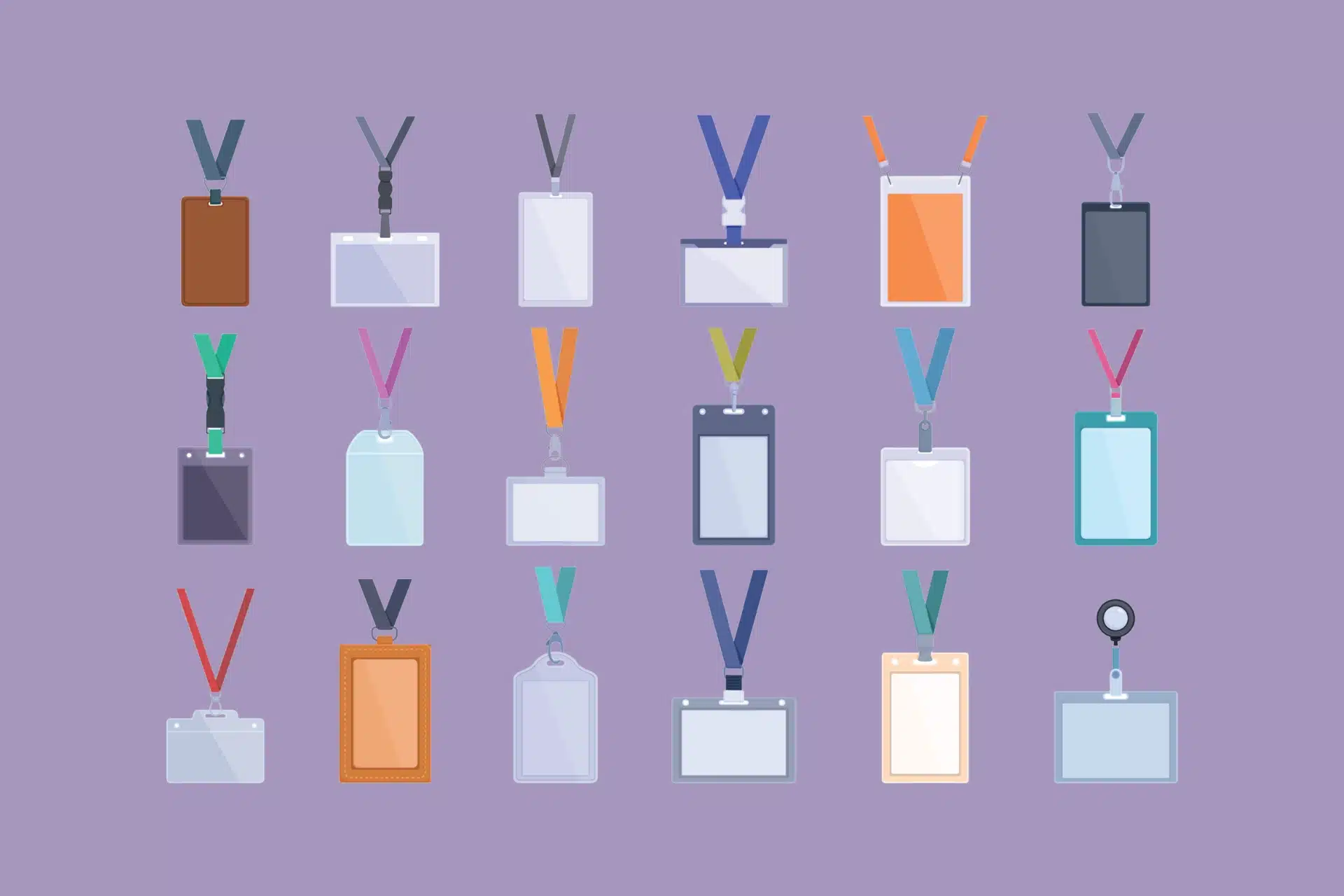
Lanyard clips are teeny tiny pieces of hardware, yet their unseen impact on day-to-day organisation is outsized. Without them, your lanyards would be rendered useless, unable to carry workplace essentials, identification and keys / key fobs comfortably.
They’re also working hard to grant their users a frictionless experience on the move, allowing their attachments to be unclipped hassle-free. In packed event halls and at access control points, this is essential, but really, the benefits can be felt in any scenario.
Read on to discover which types of lanyard clips are best suited to your needs, including practical suggestions for different industries.
Skip ahead to:
- TL;DR
- Types of Lanyard Clips at a Glance
- Compatible Connection Styles
- Deciding Factors
- A Deep Dive Into the Types of Lanyard Clips: Pros & Cons
- Other Handy Lanyard Acessories
- Our Recommendations Based on Use Case
- Conclusion: Help is Just a Call Away
- FAQs
TL;DR
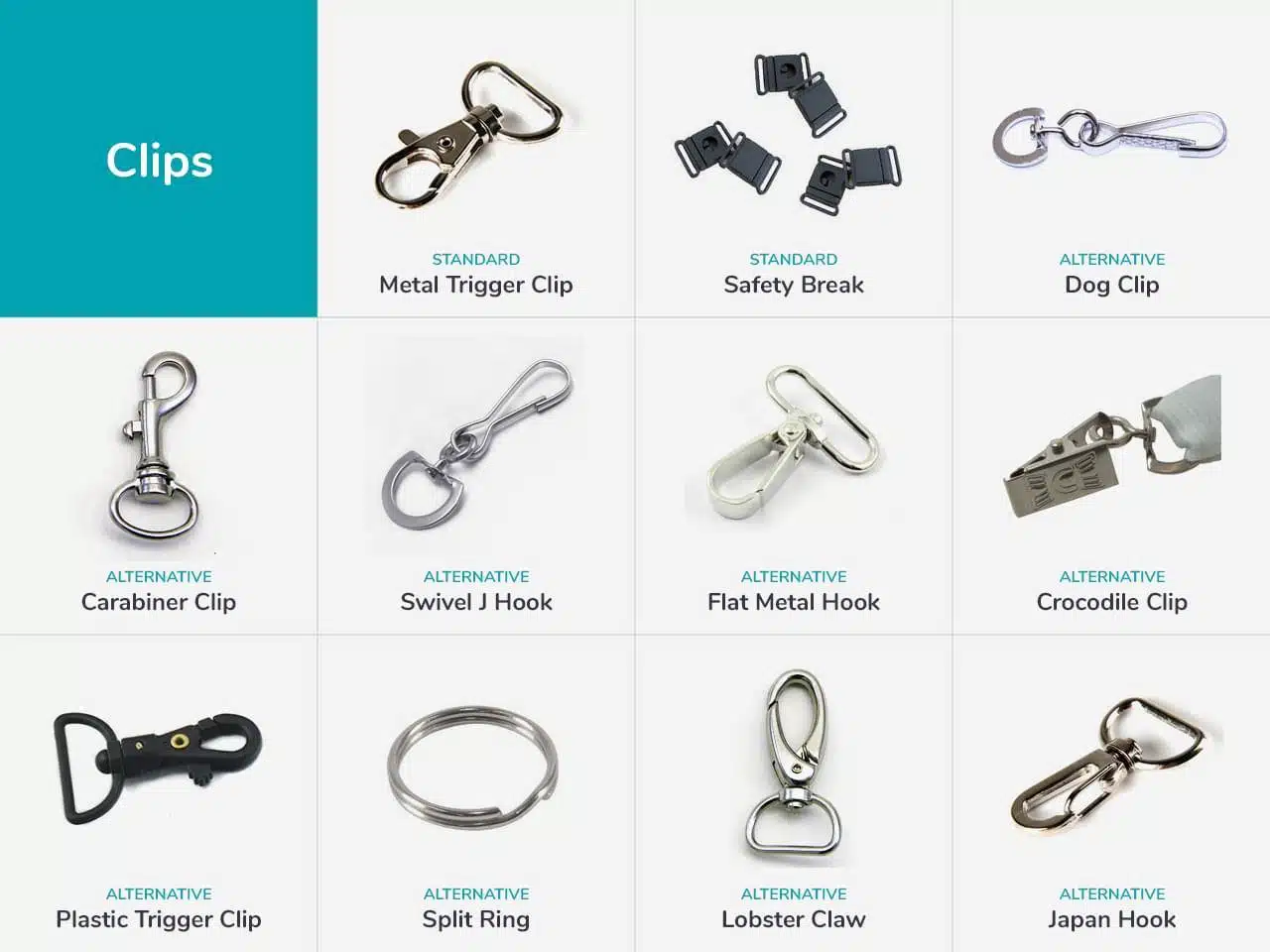
Numerous different types of lanyard clips exist to suit varying needs. Metal trigger clips are the standard, whereas breakaway clips are the obvious choice where health, hygiene and safety are top concerns. Dog clips, which keep cards always facing forward, are optimal for security uses.
Types of Lanyard Clips at a Glance
| Attachment Type | Description | Stand Out Feature | Suited To |
| Metal Trigger Clip | A robust metal clip, featuring a spring-loaded trigger gate that opens outwards and a swivel D eye. | Ease of use. | Lightweight items and ID cards. |
| Safety Break | A plastic clasp, designed to break into two separate parts when put under pressure. | Releases under tension. | Schools, healthcare and industrial settings where health and safety are paramount or snag risks are higher. |
| Dog Clip / J-Hook | Similar to trigger clips, but lacking the swivel action and activated with a downward-pulling pin. | Simplicity. | Lightweight, smaller items that don’t need to be displayed constantly. |
| Carabiner Clip | A looped metal clasp with a spring-loaded gate that opens inwardly. | Weight-bearing capacity. | Carrying heavier items, like water bottles, securely. |
| Swivel Dog Clip / J Hook | A standard dog clip / J hook, but with swivel capability. | Swivel helps prevent attachments from twisting backwards. | Events, workplaces, schools – anywhere where ID needs to be clearly displayed. |
| Split Ring | AKA a key ring, a circular piece of metal onto which you can slide your items. | Can carry multiple items, no problem. | Keys and heavier items. |
| Lobster Claw | An oval-shaped clip with a spring-loaded trigger gate. | Very durable. | Carrying multiple items that don’t need to be facing forward 24/7. |
| Crocodile Clips | A plier-like, spring-tensioned metal clip with serrated jaws. | Badge holders are not required; they can clip directly onto a card. | Small, temporary items. |
| Quick Release / Short Release Clip | Similar to the safety breakaway, but requires manual action to open. | Detach ID cards fast without removing the lanyard. | Access cards. |
| Strap Loop with Popper Fitting | A plastic strap with a low-profile popper fitting. | Flatter, tidier badge presentation. | Ideal when clear badge visibility and neat presentation are key. |
Compatible Connection Styles
Besides the different types of lanyard clips, the lanyards themselves can vary. While I won’t get into the nitty-gritty here, as we already have a comprehensive guide on the subject, I want to linger on the connection styles available. After all, they have a bearing on the overall functionality of the design.
- Standard: The classic lanyard, with a single loop of material and one clip attached. Any of the various types listed up top can be attached.
- Double-Ended: A more functional take on the standard lanyard, featuring two clips on either end to prevent badges from flipping. Here, you can even mix and match lanyard clasp types, perhaps with a sturdy carabiner for key carrying alongside a breakaway for added safety.
- Retractable: These lanyards come with a badge reel or pass holder sewn into the material, allowing for the attached item to be pulled out without coming loose. The attachment here is usually a plastic strap loop and popper fitting, or a classic dog clip for extra strength. Needless to say, they’re incredibly handy!
Deciding Factors
Before we take a deep dive into the different types of lanyard clips – their pros and cons, as well as how they perform in situ – let’s take a brief look at the considerations guiding your decision. While, yes, lanyards speak a visual language, it’s the practical design elements that customers most often ask us about.
With so many options on the table, it’s important you drill down into the details. Ask yourself:
- How durable does the lanyard need to be? For everyday use or for a specific event?
- What will be attached, an ID pass only, or a set of keys and fobs?
- Are your lanyards for guests? If so, will you be switching out the badge often? Crocodile clips make it particularly easier to swap attachments.
- Do you need a design that can accommodate fast-scanning, to quickly head into the office or for routine security duties?
- If employee identification is the objective, do they need to be visible and forward-facing at all times?
- Are there sector-specific requirements you need to tackle, like breakaways for health and safety, or badge reels to enhance convenience during high-traffic jobs?
- How much budget are you working with? Plastic trigger clips present a more affordable option, whilst sturdier carabiners are more expensive due to their durability.
- Is sustainability important to you? Then you’ll also need to think about whether recycled plastic or metal is right for the job.
With the answers, you can match your requirements to the lanyard attachments in question.
A Deep Dive Into the Types of Lanyard Clips: Pros & Cons
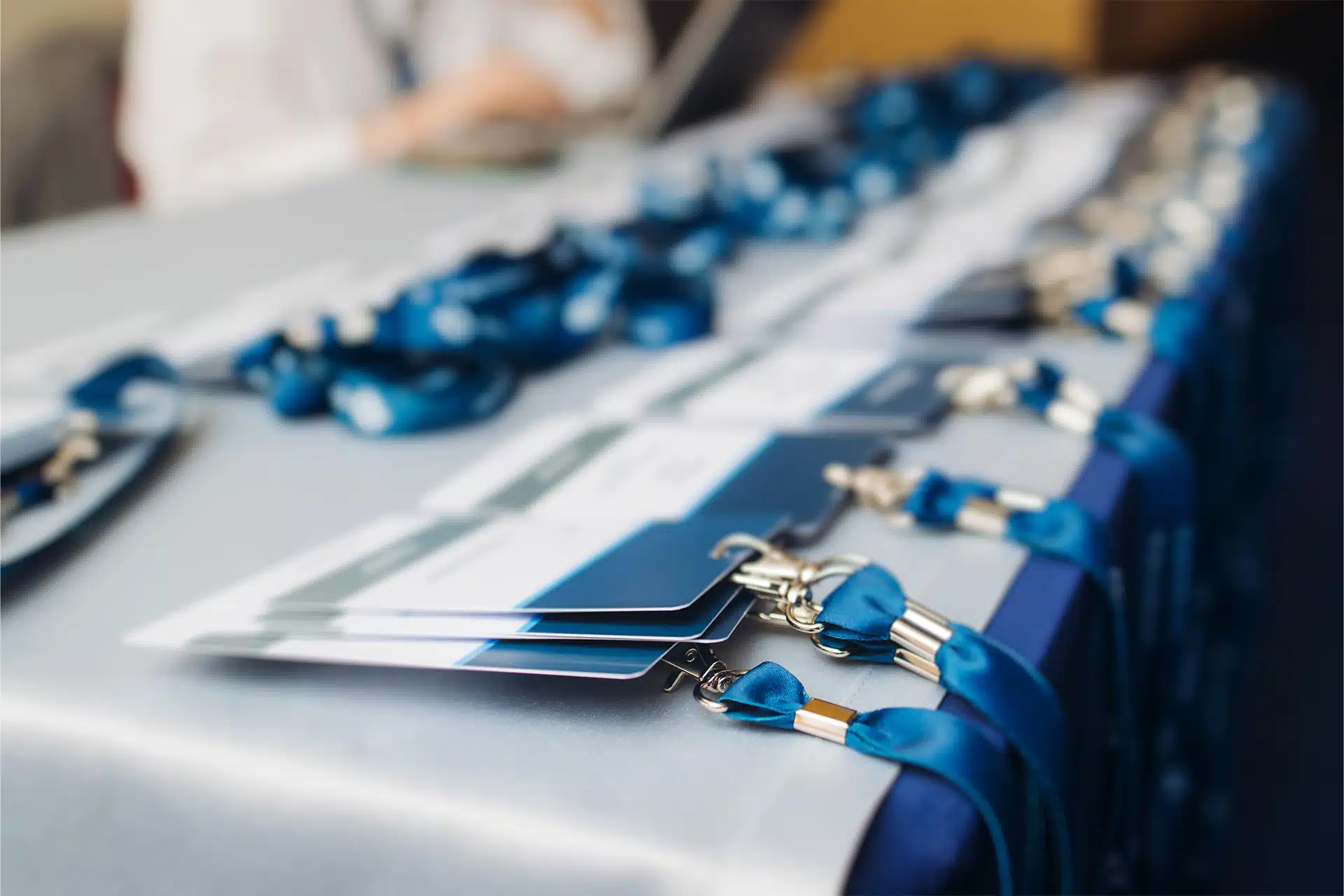
As such a ubiquitous tool, lanyards appear in practically every professional setting, so they’re a familiar sight, but how much attention are you paying to their clips and clasps? Some may feel more familiar, others completely new. Here are the most common ones broken down.
Metal Trigger Clip
Metal trigger clips are the most widely used option across all types of lanyard clips, prized for their balance of strength, ease of use and versatility. If you’re unsure where to start when comparing lanyard clasp types, this is often the benchmark against which other types of lanyard hooks are judged.
Pros:
- Extremely easy to clip and unclip on the go
- Reliable for everyday use across multiple industries
- Swivel design keeps IDs facing forward more consistently
- Strong enough for light-to-medium weight items
Cons:
- Heavier than plastic alternatives
- Can wear over time with constant use
- Not ideal for high-safety environments without a breakaway addition
Safety Break
Safety breakaway clasps are designed with user safety in mind, making them a staple across environments where snagging is a concern. Among the different types of lanyard clips, they’re less about carrying capacity and more about reducing risk.
Pros:
- Breaks apart under pressure to prevent choking or injury
- Essential for compliance in schools, healthcare and industrial settings
- Lightweight and comfortable for all-day wear
- Easy to reattach after separation
Cons:
- Not load-bearing; unsuitable for heavier items
- Can detach unexpectedly if tugged
- Typically made from plastic, so less durable over time
Dog Clip / J-Hook
Simple and functional, dog clips (or J-hooks) are one of the more minimal types of clips for lanyards. Their no-frills design makes them cost-effective and easy to use, though they lack some of the refinements of other lanyard hook types.
Pros:
- Lightweight and budget-friendly
- Straightforward mechanism with minimal moving parts
- Quick to attach and detach items
- Suitable for basic ID use
Cons:
- No swivel, so items can twist or face backwards
- Less secure than enclosed clip designs
- Not ideal for heavier or high-value items
Carabiner Clip
Carabiners stand for their strength and load-bearing capability. Borrowed from climbing gear design, they’re ideal when durability and security are top priorities. So when users are carrying expensive or restricted items like key passes and pen drives.
Pros:
- High strength and excellent weight capacity
- Secure spring gate reduces risk of accidental detachment
- Durable metal construction for long-term use
- Great for carrying keys, tools or bottles
Cons:
- Bulkier and heavier than other clip types
- Less suited to slim badge holders
- Can feel oversized for everyday office use
Split Ring
Split rings are a classic solution for key carrying, and when multiple attachments are involved. While technically simpler than other lanyard clasp types, they’re incredibly effective for specific use cases.
Pros:
- Extremely secure once items are attached
- Ideal for holding multiple keys or fobs
- Durable and resistant to wear
- No moving parts to break or fail
Cons:
- Time-consuming to add or remove items
- Not suitable for quick swapping
- Can be fiddly, especially with frequent use
Lobster Claw
Lobster claw clasps offer a slightly more enclosed and secure alternative to trigger clips. Among the different types of lanyard clips, they strike a good balance between durability and compact design.
Pros:
- Strong and durable metal construction
- Spring-loaded closure provides secure fastening
- Compact shape reduces bulk
- Suitable for multiple attachments
Cons:
- Smaller opening can make clipping fiddly
- Less convenient for frequent detachment
- Items may not stay forward-facing without a swivel
Crocodile Clips
Crocodile clips are unique among my list of lanyard clips, as they grip directly onto materials rather than attaching via a loop or hole. This makes them especially useful for temporary or interchangeable items – think, guest passes or badges for temporary or rotating roles.
Pros:
- Clips directly onto ID cards or fabric
- Ideal for temporary badges or quick swaps
- Eliminates the need for badge holders
- Lightweight and easy to use
Cons:
- Can damage delicate materials or printed cards
- Less secure than enclosed clip types
- Not suitable for long-term or heavy-duty use
Quick Release / Short Release Clip
Quick release clips are designed for convenience, allowing users to swiftly detach items without removing the entire lanyard. As you can imagine, they’re particularly popular in access-controlled environments.
Pros:
- Enables fast, easy detachment of ID or keys
- Reduces need to remove lanyard repeatedly
- Improves efficiency in high-traffic settings
- Secure when locked in place
Cons:
- Additional component adds complexity
- Can wear out with repeated use
- Not as strong as fixed metal clips
Strap Loop with Popper Fitting
Often found alongside a badge reel, these types of clips provide a clean, low-profile way to attach ID cards for lanyards of all persuasions. Among all the options, they’re usually chosen for presentation and neatness.
Pros:
- Creates a flat, tidy badge presentation
- Lightweight and unobtrusive
- Easy to fasten and unfasten
- Ideal for maintaining consistent ID orientation
Cons:
- Limited weight capacity
- Plastic poppers can wear or snap over time
- Less versatile for carrying multiple items
Honourable Mentions: Other Handy Lanyard Accessories
To wrap up the list, take a look at these additional lanyard accessories.
- Water bottle holders: Transform lanyards into convenient water bottle holders. So, no matter where you are, you’ll no longer have to feel dehydrated! They’re particularly useful in charity days where physical activities are happening.
- Length adjusters: When lanyards are too long, not only are they annoying, but a potential safety risk too. The solution? A lanyard length adjuster that, with its gripping mechanism, provides plenty of flexibility.
- USB drive holders: USB Drive Holder. The ideal way to make sure your important files will never go missing. They contain a unique clip at one end that securely holds your USB drive in place and can incorporate your logo and branding.
- ID card holders: Around the same size as a bank card, these rigid holders extend the life of your identification, passes and card fobs. Either open or enclosed, they come in numerous colours and both landscape and portrait.
- PVC pouches: Ideal for printed paper or plastic cards, these clear wallets keep your ID pristine throughout the day. With different sizes available, including custom measurements, they’re suited to numerous applications.
Our Recommendations Based on Use Case
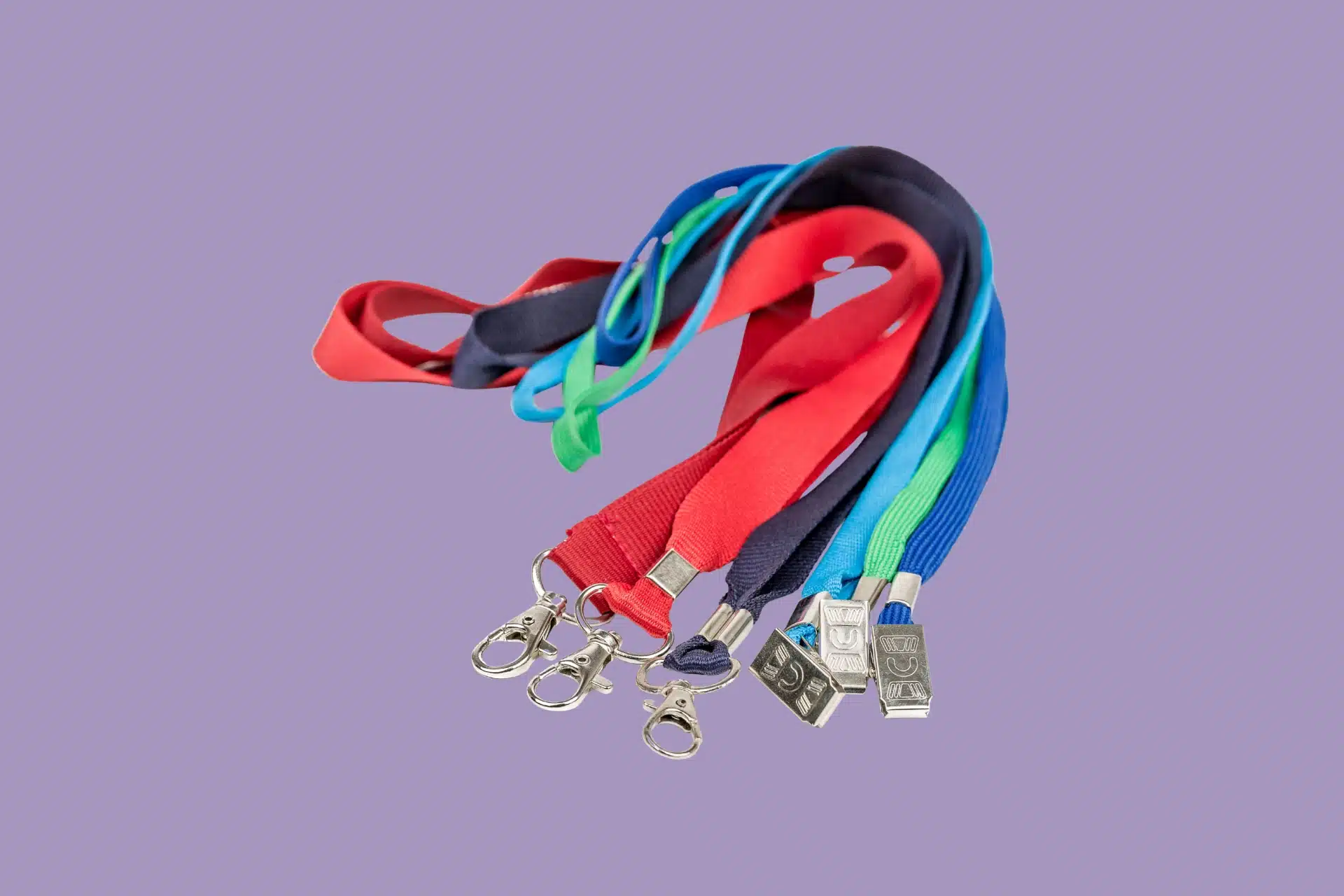
When clients come to us with a brief, it’s not uncommon to see all of the attention given to the strap, with specific material suggestions, printing questions and a crisp logo to boot, but no mention of the attachments in sight.
Don’t fall into this trap; some of the loudest lanyard complaints emanate from a mismatch in hardware. Failed clips, twisting passes, and cracked badge holders can all be avoided with a little foresight.
As a general rule:
- Single clips complement most standard badge holders;
- Double clips work well with larger ID card sizes;
- While heavier items benefit from stronger metal clips or reels.
Now, on to the specifics: here are the types of lanyard clips we recommend for the most common use cases.
Offices & Other Corporate Environments
In the average workplace, your priorities will likely be professional presentation, day-long comfort, clear ID visibility, and user-friendly detachment/reattachment for keys and fobs.
My recommendation: A sharply printed branded lanyard, fitted with a metal trigger clip and a rigid card holder. Add a split ring if the lanyard needs to carry keys.
High-Traffic, High Activity Scenarios
Whether a charity fun run day or your job demands a lot of walking around, it’s essential you pick a durable attachment that can handle being jostled around. Here, more solid metal clips trump cheap plastic fittings.
My recommendation: A woven lanyard featuring a robust lobster clip or carabiner.
Educational Settings (Schools, Colleges, Childcare)
Educational settings come with the string of child safeguarding attached; therefore, ID cards must be visible at all times, particularly when visitors are coming and going from the site.
My recommendation: Colour-coded lanyards for staff and guests, each fitted with a safety break and sturdy swivel dog clip.
Healthcare & Clinical Spaces
Healthcare lanyards have a tricky juggling act to balance ID visibility with health and safety policy. Here, a smaller, low snag risk option is best, and, of course, it’s got to be extremely robust for hours of uninterrupted wear.
My recommendation: A smaller-sized ID card attached to a tubular polyester lanyard, with a safety break and metal trigger clip or neat badge clip.
Industrial Facilities
In warehouses, distribution hubs and other settings where heavy machinery is used, your lanyards must be specialised. That means snag risk mitigation, prioritising comfort and durability, and thinking through tool management.
My recommendation: Use a stronger lanyard material along with more heavy-duty hardware like split rings, lobster claws and carabiner clips.
Large-Scale Events & Conferencing
If you’re planning an event, sponsor visibility and brand awareness opportunities will be front of mind. As such, you’ll want to pick hardware that shows off the effort your team poured into those beautiful designs. It’s also likely that your badges are on the larger side, so the clips will be really pulling their weight.
My recommendation: Here, a badge loop and popper fitting combo is ideal, but a swivel dog clip also does the job wonderfully. Attach them to clean dye-sublimated lanyards to make your branding pop.
Conclusion: Help is Just a Call Away
Lanyard attachments, clips and clasps might appear simple on the surface, but as I’ve explored, there are so many different types out there, each with its own unique set of pros and cons.
Don’t skimp on the research, consider how your lanyards need to work in situ, and get second opinions from your team. With that essential trio covered, you’re sure to make the right decision.
Nonetheless, if you’re ordering in bulk, it can feel daunting. So don’t forget to speak with the experts. At Only Lanyards, we’ve been specialising in our namesake for over two decades, helping household names deliver unforgettable promotional campaigns – get in touch today.
FAQs
What Are The Most Common Types Of Lanyard Clips?
The most common types of lanyard clips include metal trigger clips, safety breakaways, dog clips (J-hooks), carabiner clips, lobster claws, split rings, crocodile clips and strap loops with poppers. Each serves a different purpose, from lightweight ID display to heavy-duty key carrying. Metal trigger clips are the most widely used due to their balance of durability, ease of use and versatility across industries.
Which Lanyard Clip Is Best For Health And Safety Environments?
Safety breakaway clips are the best choice for health and safety-focused environments. They are specifically designed to snap apart under tension, reducing the risk of choking or injury if the lanyard becomes caught or pulled. This makes them essential in schools, healthcare settings and industrial workplaces where snag hazards are more likely.
What Is The Difference Between A Trigger Clip And A Dog Clip?
A trigger clip features a spring-loaded gate and usually includes a swivel mechanism, allowing attached items to stay forward-facing and easy to access. In contrast, a dog clip (or J-hook) has a simpler design without a swivel, using a downward-opening mechanism. While dog clips are more lightweight and cost-effective, trigger clips offer better security and improved presentation for ID badges.
Which Lanyard Clip Is Strongest For Carrying Heavy Items?
Carabiner clips are the strongest option for carrying heavy items. Designed with durability in mind, they feature a robust metal body and a secure spring gate that minimises the risk of accidental detachment. Split rings are also highly secure for holding multiple keys, although they are less convenient for frequent removal.
How Do I Choose The Right Lanyard Clip For My Organisation?
Choosing the right lanyard clip depends on your specific use case. Consider factors such as the weight of attached items, the need for safety features, how often items need to be detached, and whether ID visibility is important. For example, offices typically benefit from metal trigger clips, while schools require safety breakaways, and industrial settings may need heavy-duty options like carabiners or split rings. Matching the clip type to your environment ensures both practicality and durability.